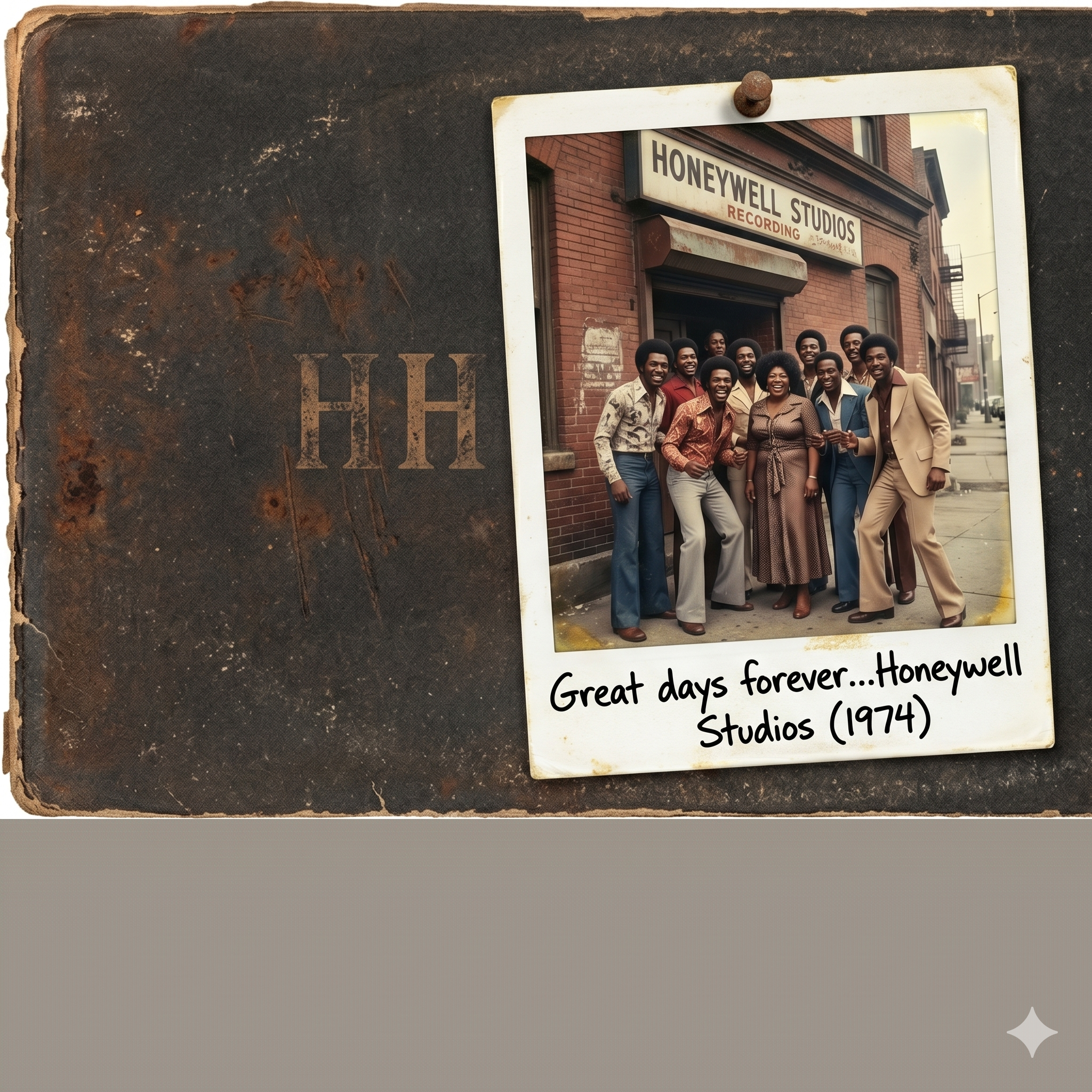
The Lost Sessions (1972) The Music: "The Lost Sessions (1972)" is not just an album; it’s a sonically dense, emotionally charged time capsule. This collection captures the pinnacle of early 1970s Black American music, fusing heavy, cinematic Funk with sophisticated R&B and the raw sweat of gospel-fired Soul. Listeners can expect the deep, resonant thump of analog basslines, the staccato cry of wah-wah guitars, shimmering Hammond organs, and the kind of commanding, flawlessly arranged vocal harmonies that can only be forged on the road. This is the authentic sound of an era—grit, grace, and fire, preserved in magnetic amber. The Backstory: The Rise and Fall of Harmony House Deep in the vibrant, often precarious music scene of Chicago in the late 1960s, a visionary named Arthur "Artie" Vance founded Harmony House Records. Artie was a hustler with an impeccable ear, and he had a rule: "If they don't command that stage, they don't get the contract." His roster was small, but every artist was a supernova. The world never saw their likes before—young, Black talent that was explosive, magnetic, and undeniably ready. There were The Apex Players, a five-piece funk ensemble with a rhythm section so tight they sounded like a Swiss clock; Sister Lena, a vocal powerhouse with a range that could crack stone; and The Dynamics, a trio of smooth-as-velvet brothers who moved with choreographed precision. This was no assembly-line pop outfit. Artie and his artists did it the hard way. They lived together in a battered bus, traversing the country from city to city, show after endless show. They played to packed chitlin circuit joints where the air was thick with smoke and energy, and they endured some of the worst racism America had to offer—turned away from diners, threatened by local law enforcement, and forced to perform in back-alley "hide-in-hole" dives where they changed into their flashy, sequined stage outfits in damp storage closets. Through it all, the bond was absolute. "Blood, sweat, tears, and years," was their motto. One night in late 1971, it all changed. A powerful concert promoter, usually dismissive of Artie's outfits, saw Lena and the Players tear down a theater in Philadelphia. It was the big break they’d starved for. Almost overnight, everything flipped. The cramped bus was swapped for a fleet of fancy European cars. The hide-in-holes were replaced by massive, flashing-light city venues and upscale hotel suites. They were on the edge of stardom, the toast of the town, and they spent many long nights in the studio, putting down the tracks that they knew would be their masterpiece—an album titled The Sun Also Rises. But something was happening to Artie. The sudden influx of money and fame had drawn a dangerous new crowd into his inner circle. He became "fancy." He pulled away from the artists who had toughed it out with him, spending more time with shadowy investors and new, beautiful "friends" in dark rooms. The business acumen that built Harmony House began to dissolve, replaced by a growing dependence on heavy, debilitating drugs. In the autumn of 1972, the tension was unbearable. Artie had been paranoid, mumbling about "protecting his formula." He missed the final mixing session for the album. Then, he missed the cover art meeting. And then, he just... didn't come back. When the frantic artists checked the Harmony House office, it was empty. Not only was Arthur Vance gone, but the heavy steel cabinet where all the tape reels—years of recorded genius, blood, and tears—had been locked was wide open and completely bare. Silence and rumor took over. Was he killed by his new "crowd"? Had he stolen the tapes to sell? Or did he, in a paranoid haze, simply vanish with them? Artie and the tapes were gone, and the dream evaporated. For 25 years, Harmony House was a whispered urban legend, a "what if?" of American music history. The artists were scattered, some finding modest success, others retreating from music entirely. The legacy was dead. until. In 1997, during a massive restructuring of an old industrial complex that had once housed Artie Vance's primary drug supplier, a worker discovered a rusted, heavy-gauge steel safe, marked only with the faint, faded initials "HH." Inside, preserved against all odds by the dark, dry vault, were the original, unedited master reels from that fateful summer of 1972. "The Lost Sessions (1972)" are those recordings. This collection is the final testament to what should have been a legendary era—raw, triumphant, sophisticated, and now, finally, found.
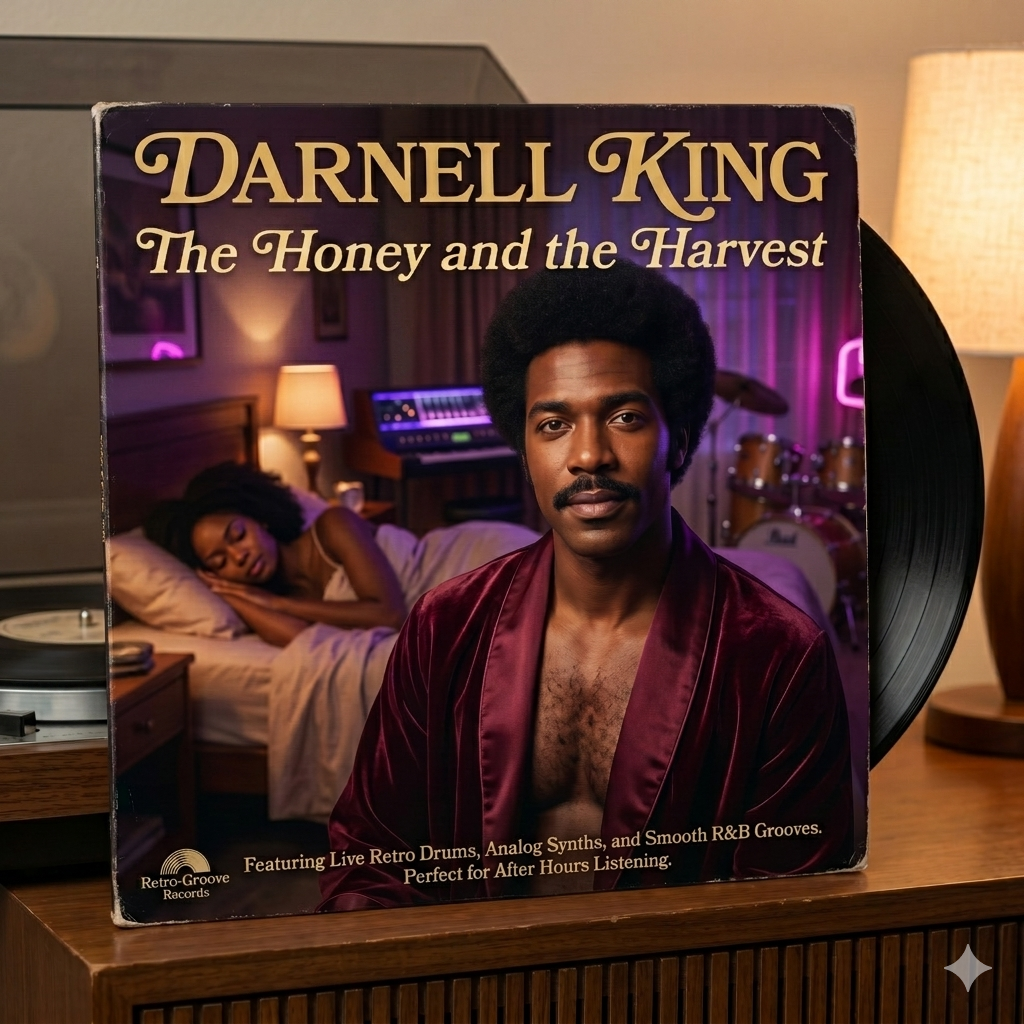
Darnell King - The Honey and the Harvest Darnell King’s 1978 opus, The Honey and the Harvest, is celebrated today as a masterpiece of retro-futuristic R&B. But for almost two years, the master tapes were locked in a steel safe, inches away from an incinerator. Darnell was the golden boy of Retro-Groove Records, laying down vocals so smooth they could melt ice. But behind the scenes, he was playing a dangerous game: he was having a passionate, underground affair with Veronica, the glamorous wife of the label's notoriously ruthless owner, "Big" Marcus Vance. When Marcus caught wind of the whispers, he immediately pulled the plug on the project, vowing to bury Darnell's career forever. It took a massive buyout from a rival distributor to finally pry the rights from Marcus's hands and get the record pressed. But here is the ultimate fun fact: Marcus eventually signed off on the album's release, but he clearly never looked closely at the promotional artwork Darnell had already shot for the cover. That beautiful woman sleeping peacefully in the dimly lit background of Darnell's bedroom? That is Veronica. Darnell had slipped her into the photoshoot as the ultimate flex. By the time Marcus realized his own wife was immortalized on the cover of his rival's biggest hit record, the album had already shipped a million copies. Darnell didn't just steal the show—he put the evidence right on the shelf.
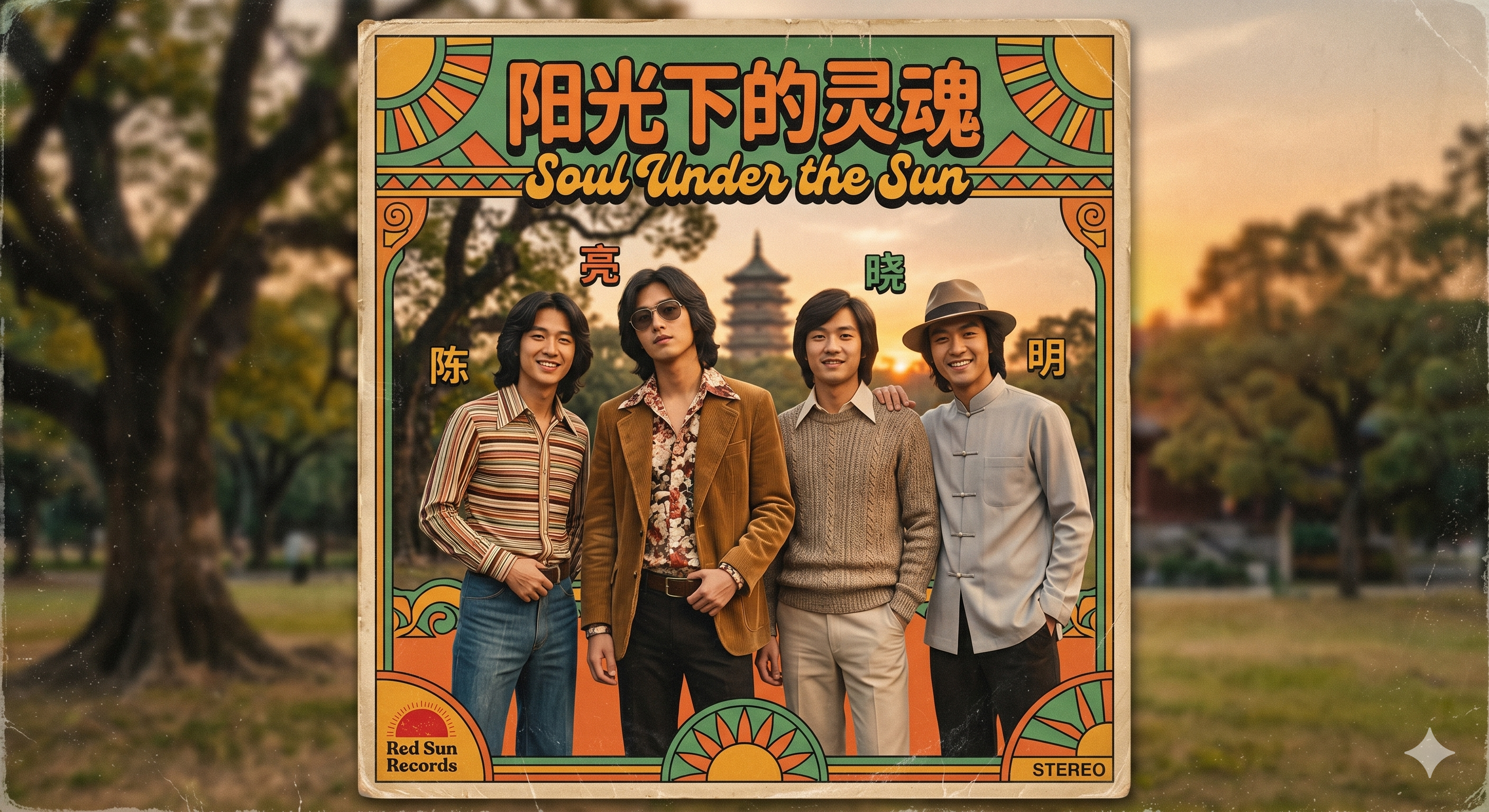
Soul Under the Sun (阳光下的灵魂) The Year: 1974 Perfect Listenin Location: The flickering, incense-scented backstreets of Kowloon, Hong Kong. The Backstory: From the Night Market to the Stars In the sweltering summer of 1972, four childhood friends—Chen, Liang, Xiao, and Ming—spent their days repairing transistor radios in a cramped workshop and their nights performing for tips at the Temple Street Night Market. They called themselves The Radiant Suns (熠熠生辉). While the rest of the world was obsessed with the psychedelic rock of the West, the Suns were busy creating something entirely different. They took the soulful, heartbreaking melodies of old Shanghai Shidaiqu and collided them with the heavy, funk-driven basslines they heard on smuggled Motown records. Their big break came when a legendary film producer heard them playing through a rainstorm outside a dim sum parlor. He was struck by the contrast of their smooth, four-part harmonies against the gritty, urban backdrop. Within a week, they were in a studio packed with analog tape machines and vintage Moog synthesizers. The result was their magnum opus: "阳光下的灵魂" (Soul Under the Sun). The album became the soundtrack to a generation of youths navigating a changing world—caught between the deep traditions of their parents and the electric, neon future of the city. What to Expect: The Musical Style When you drop the needle on Soul Under the Sun, you aren't just listening to an album; you are stepping into a cinematic, sepia-toned dream. Here is the "Radiant Suns" signature sound: 1. The "East-Meets-West" Groove Expect deep, "fat" basslines played on vintage hollow-body guitars that feel like a heartbeat. This is layered with traditional Chinese woodwinds (like the Dizi flute) that have been run through psychedelic "wah-wah" pedals and echo chambers. 2. Velvet Harmonies The band is famous for their lush, four-part vocal arrangements. Their voices blend with a silken smoothness reminiscent of The Temptations, but sung in a poetic, Mandarin-Cantonese hybrid dialect that emphasizes the tonal beauty of the language. 3. Analog Warmth and "Neon" Synths The production is soaked in 1970s analog warmth. You’ll hear the shimmering, space-age "bloop" of early synthesizers meant to mimic the flickering of neon signs, alongside a very tight, dry drum sound that keeps the rhythm danceable but sophisticated. 4. The Mood: Melancholic Disco The music sits in that perfect middle ground between high-energy funk and late-night longing. It is "C-Pop" before the term existed—sophisticated, soulful, and slightly mysterious. It’s the music you’d expect to hear in a smoke-filled 1970s lounge where the velvet curtains are red and the city lights never turn off. Key Tracks to Imagine: "Midnight at the Ferry Pier" (A slow-burn soul ballad with a crying electric guitar). "Electric Dragon" (An up-tempo funk track with a heavy brass section). "Rainy Street Reflection" (A psychedelic, atmospheric instrumental). Listening Tip: Best enjoyed at dusk, with a cup of strong oolong tea or a cold glass of lager, while watching the city lights begin to blur through a window.
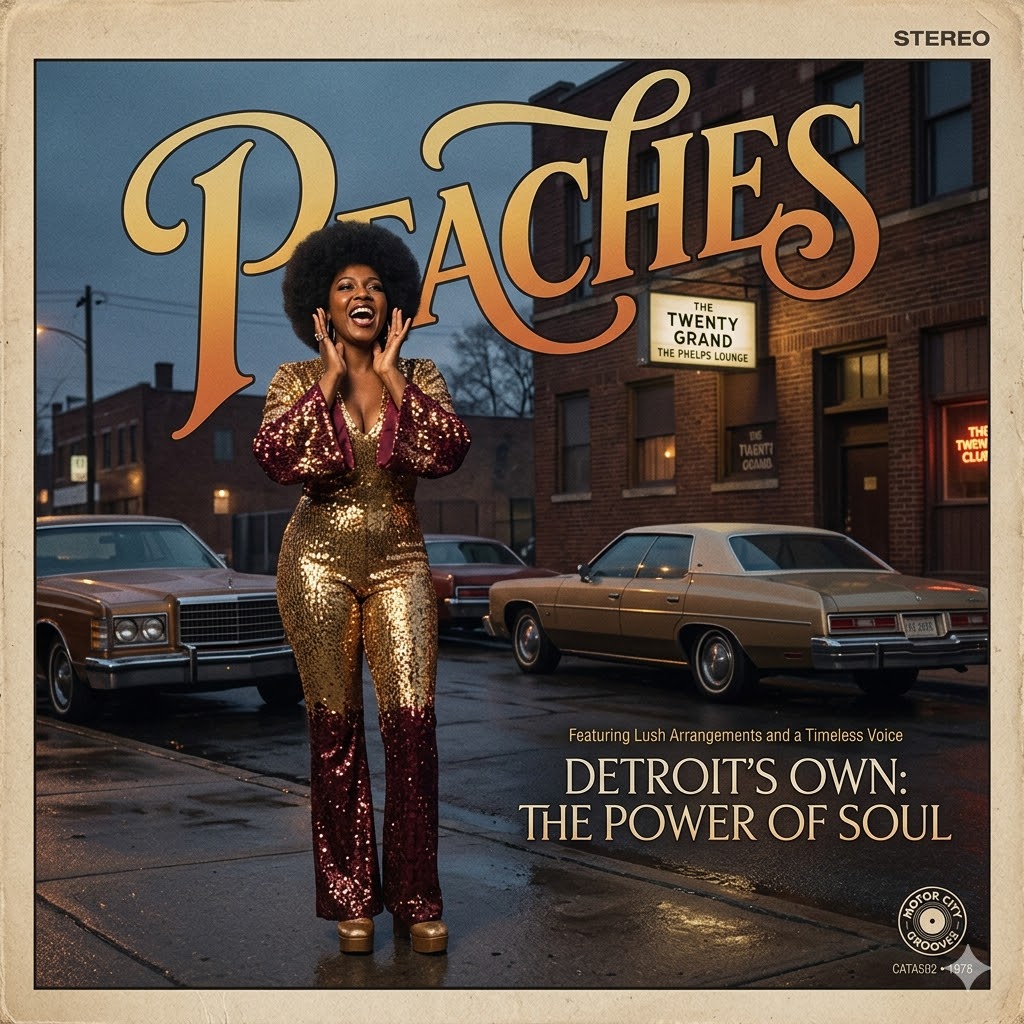
From 1976 - 1979 A black women named "Peaches' Born and raised in Detroit Mi. Had a very powerful voice and personality to match. Her mother said "she was singing with that powerful voice since before she can even talk" and some say "We heard her singing through her mother's belly" - We haven't confirm that yet- (lol) Peaches voice was mixed with Soulful chord progressions and lush arrangements reminiscent of that Detroit's iconic music era. Timeless sounds for sampling & chopping into a modern hits.
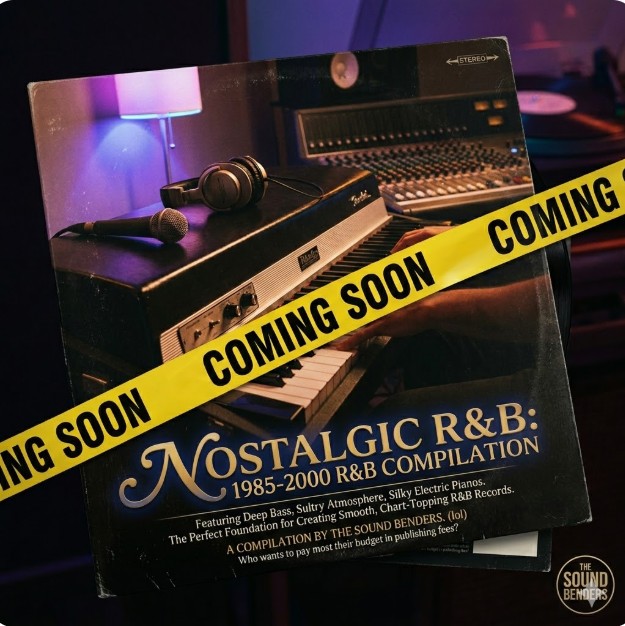
Coming soon -We are currently producing a nostalgic R&B type compilation in the style of 1985 - 2000 R&B. This will be perfect for producers looking for that nostalgic sound " Who wants to pay most their budget in publishing fees? "Silky electric pianos, deep bass, and sultry atmospheres. The perfect foundation for creating smooth, chart-topping R&B records.
The details and description for your next brand new album will go right here! Ready to be updated with new titles, backstory, and tracks.